

What if some of our most basic assumptions about reality are incomplete?
We live in an extraordinary time.
Science has given us an increasingly sophisticated understanding of the physical universe, from the workings of the human brain to the strange behavior of matter at the quantum level. Yet some of the most fundamental questions of human existence remain surprisingly unsettled:
- What is consciousness?
- Does the brain produce consciousness, or might consciousness be more fundamental than we assume?
- How much of the reality we experience is actually “out there,” and how much is constructed through perception?
- What does quantum physics really tell us about reality, and what does it not tell us?
- What roles do intention, fear, choice, and relationship play in human experience?
- And if our assumptions about consciousness changed, would that change how we understand ourselves and the way we live?
Rethinking Reality is a 14-week investigation of these questions.
It is not a religion, a spiritual teaching, or a belief system.
You will not be asked to accept that consciousness is fundamental, reject materialism, believe in a soul, embrace quantum mysticism, or agree with the facilitator.
Skepticism is welcome. So is uncertainty.
What is required is curiosity.
Why Explore These Questions Now?
For several centuries, the dominant scientific picture of reality has been remarkably successful: matter is fundamental, the universe operates according to physical laws, and consciousness somehow emerges from sufficiently complex biological brains.
That model has given humanity extraordinary technological and scientific achievements.
But consciousness remains a problem.
We can increasingly describe what happens in the brain when someone sees red, experiences pain, remembers childhood, falls in love, or becomes frightened. But describing the neural activity associated with an experience is not necessarily the same as explaining why there is a subjective experience at all.
Meanwhile, developments in physics have overturned many intuitions inherited from the classical world. Matter is considerably stranger than ordinary experience suggests. Quantum theory predicts experimental results with astonishing accuracy while leaving vigorous disagreement about what those results ultimately tell us about reality.
None of this proves that consciousness is fundamental. But it does justify asking better questions. And those questions may matter beyond philosophy.
Our assumptions about what human beings fundamentally are influence how we understand meaning, relationships, fear, death, responsibility, cooperation, and the purpose, if there is one, of human life.
Perhaps it’s time to examine those assumptions.
A Different Kind of Course
This isn’t a lecture series in which an expert tells you what reality is. It’s a structured investigation.
One important framework we will examine comes from physicist and consciousness researcher Thomas Campbell, author of My Big TOE (Theory of Everything). Campbell proposes a provocative reversal of the conventional materialist model: Instead of consciousness arising from physical reality, physical reality may arise within consciousness.
His model treats reality as fundamentally informational and proposes that conscious beings participate in an evolving system in which choice, intention, relationship, fear, cooperation, and love have consequences for the quality of consciousness itself.
It’s a theory; albeit an ambitious one.
Throughout the course, we will therefore make careful distinctions among:
- What evidence establishes
- How evidence is interpreted
- What Campbell’s model proposes
- What competing explanations propose
- What we can investigate through our own experience
- What remains unknown
The objective is not to reach predetermined conclusions. The objective is to become better investigators.
What We Will Explore
Over fourteen weekly gatherings, we will investigate questions including:
What do we actually mean by reality? How much of what we experience is the world itself, and how much is constructed through perception?
What is consciousness? What does neuroscience tell us about the relationship between brain and experience, and what questions remain unresolved?
Could reality fundamentally be information? We will examine Campbell’s model of physical reality as a rule-governed information environment and consider both its explanatory possibilities and its limitations.
What does quantum physics actually tell us? We will explore several relevant experiments and distinguish experimental findings from interpretations of those findings. Quantum physics will not be used as a magic wand to prove metaphysical claims.
What is intention? Is there a difference between what we consciously intend and the deeper motivations actually driving our choices?
What do fear and ego do to perception? We will investigate how fear can narrow our available responses and how our attempts to control uncertainty affect ourselves and other people.
Can the quality of consciousness change? Campbell describes this as reducing “entropy.” We will examine what he means and whether the phenomenon he describes can be observed in ordinary life.
What do relationships reveal about us? Other people provide remarkably efficient opportunities for discovering what happens when our beliefs, identities, expectations, and need for control meet reality.
Do we actually have free will? We will explore choice, conditioning, habit, responsibility, and the possibility that meaningful choice plays a role in the development of consciousness.
What about experiences that do not fit comfortably within conventional models? Near-death experiences, intuition, synchronicity, reports of nonlocal perception, out-of-body experiences, and other anomalous phenomena raise difficult questions. We will approach them neither with automatic belief nor automatic dismissal, but by examining what kinds of evidence different claims actually warrant.
And ultimately:
If consciousness comes first, then what?
If even some of these possibilities prove worthy of serious consideration, what difference should they make to the way we live?
You Won’t Just Think About Consciousness
Each gathering begins with approximately ten minutes of settling and attention practice. No previous experience is necessary.
These practices are not religious. They provide another method of investigation. At different points we may observe breathing, bodily sensation, sound, perception, thoughts, emotional reactions, and awareness itself. After all, there would be something peculiar about spending fourteen weeks discussing consciousness without occasionally examining our own.
Classes also include teaching, quiet reflection, experiential investigation, and carefully facilitated group inquiry and sharing. This is not a debate club. Nor is it an opportunity for any participant, including the facilitator, to explain the universe to everyone else.
Participants will be encouraged to distinguish:
“This is what I believe”
from
“This is what I observed.”
That distinction may prove to be one of the most valuable parts of the course.
Who Is This Course For?
Rethinking Reality is particularly intended for intellectually curious people who are willing to question assumptions without abandoning critical thinking.
You may be scientifically minded, secular, agnostic, spiritual, philosophically curious, or simply uncertain. You may have dismissed spiritual explanations of reality but also find strict materialism incomplete. You may already have a contemplative practice while wondering whether your beliefs withstand serious scrutiny. Or you may simply find consciousness one of the most fascinating unsolved questions humans have encountered.
You do not need to believe in God, an afterlife, reincarnation, nonduality, a universal consciousness, or Thomas Campbell’s theory. In fact, thoughtful disagreement will make the course better.
The only poor fit is someone who has already decided there is nothing left to investigate.
Why Only 15 Participants?
This course depends upon inquiry, not merely listening. For that reason, enrollment is limited to 15 participants.
The small cohort allows people who enjoy speaking to participate meaningfully while creating space for quieter participants to reflect and contribute without competing for airtime.
Most classes will use concise, facilitated inquiry rather than unlimited discussion.
The final gathering will be different. Participants will have considerably more time to reflect upon what they thought at the beginning of the course, what they think now, what changed, what did not, and what remains unresolved.
The 14-Week Journey
Week 1: How Do We Know What We Know?
Week 2: What Do We Actually Know Is Real?
Week 3: The Mystery of Consciousness
Week 4: Reality as Information
Week 5: The Reality Our Minds Construct
Week 6: Probability, Physics, and the Observer
Week 7: What Is Intent?
Week 8: Fear, Ego, and Control
Week 9: Can Consciousness Evolve?
Week 10: Relationships as the Laboratory
Week 11: Free Will, Choice, and Feedback
Week 12: Beyond the Ordinary Boundaries of Mind
Week 13: If Consciousness Comes First, Then What?
Week 14: What Do We Know Now?
The journey begins with a deceptively simple question: What do I think I know?
Fourteen weeks later, we will ask it again.
About the Facilitator
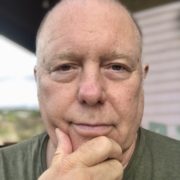 Kit Kanohoaloha Wynkoop (“Kanoho”) has spent more than five decades studying, practicing, and teaching methods for investigating consciousness and the nature of human experience.
His work has drawn particularly from Buddhist, Advaita, and Hawaiian approaches to understanding mind, awareness, perception, identity, relationship, and the nature of reality. He has studied 25 contemplative traditions and methods from cultures around the world and has spent decades exploring how ideas about consciousness can be tested not merely intellectually, but within lived experience.
More recently, his study of quantum physics, consciousness research, and Thomas Campbell’s My Big TOE raised another question:
What happens when radically different methods of investigating reality are placed into serious conversation with one another?
That question became Rethinking Reality.
Kanoho does not teach in this course; nor is he a physicist. And the course does not present Campbell’s theory, or any metaphysical interpretation of quantum physics, as established science.
Kanoho’s role is different.
He presents hypotheses then facilitates a disciplined investigation in which scientific evidence, theoretical interpretation, philosophical questions, contemplative observation, and direct human experience can be examined together without requiring participants to collapse one into another.
You are not being asked to adopt Kanoho’s worldview. You are being invited to investigate your own.
Pilot Details
14 weekly 90-minute gatherings • Live interactive online classes • Saturdays at 10:30am PST beginning January 23, 2027 and ending April 24, 2027 • Enrollment limited to 12 participants • No previous meditation, scientific, philosophical, or spiritual study required
Pilot Tuition: $95
Anticipated tuition when the completed course is offered publicly: $295
Tuition covers the complete 14-week program and accompanying course materials.
Because enrollment is intentionally small, please register only if you genuinely intend to participate throughout the fourteen weeks.
Click Here to Register
You Don’t Have to Believe Anything
Perhaps consciousness is produced entirely by the brain.
Perhaps consciousness is fundamental.
Perhaps Campbell is substantially right.
Perhaps he is substantially wrong.
Perhaps our present categories of “mind” and “matter” will eventually prove inadequate altogether.
We don’t need to decide before beginning.
We can investigate.
Rethinking Reality begins with curiosity rather than belief and treats uncertainty not as a problem to eliminate, but as an honest place from which discovery can begin.
What if reality is not quite what you thought it was?
There is only one way to find out.
Take another look.