
Most people don’t realize how tense, reactive, and mentally exhausted they are until they slow down long enough to notice it.
Modern life trains the mind to be fragmented: pulled into past regret, future anxiety, emotional reactivity, and constant self-reference. Over time, this produces chronic stress, strained relationships, burnout, and a quiet sense that something essential has been lost.
This course is designed to reverse that process.
Actualizing Freedom is a live, online, 15-gathering training that teaches you how to stabilize attention, understand your emotional life, and live with clarity and integrity in the middle of real-world pressure. It is a condensed, carefully structured version of the first two Levels of my full six-Level curriculum, refined over decades of study and teaching across contemplative traditions, Eastern psychology, and lived experience.
This is not self-improvement.
It is self-understanding.
What This Course Actually Trains
Over the course of 15 live online sessions, you will learn how to:
- Establish a stable meditation practice that strengthens attention without suppression or escapism
- Recognize how the mind creates suffering through habitual thought patterns and emotional reactivity
- Work skillfully with fear, anger, anxiety, and doubt instead of being hijacked by them
- Understand the structure of identity through direct experience, not theory
- Bring mindfulness into speech, relationships, work, and decision-making
- Develop emotional resilience without numbing or bypassing
- Live with greater ease, ethical clarity, and self-trust
Each gathering includes a talk, guided meditation, and structured discussion. This is critical: insight deepens when it is spoken aloud, questioned, and integrated with others who are doing the same work.
What We Will Cover
The curriculum progresses deliberately from foundational stability to deeper self-understanding:
- Meditation instruction and grounding in present-moment awareness
- The Middle Way: learning to live without extremes or self-violence
- The Four Noble Truths as a practical map of suffering and freedom
- Meditation in action and mindful daily living
- Understanding thoughts rather than believing them
- The “cocoon” phase: meeting the discomfort that arises when old habits loosen
- The five skandhas: how identity is assembled moment by moment
- Fearlessness, emotional maturity, and ethical clarity
- Renunciation, not as withdrawal, but as freedom from compulsion
- Spaciousness, responsibility, and conscious action in the world
- The Invitation: choosing how you live from here forward
This is a training in seeing clearly, not adopting beliefs. It’s about training to embody what you learn or think you already know, not analyzing, examining, or intellectualizing.
How This Course Is Different
- It does not require adopting a religious or spiritual identity
- It does not promise perpetual bliss or emotional bypassing
- It does not avoid uncomfortable truths about the self
- It does not treat meditation as relaxation alone
Instead, it treats awareness as a discipline, freedom as a capacity, and compassion as something that emerges naturally when self-deception relaxes.
What the Training Provides
- Clear, progressive meditation instruction oriented toward daily-life application
- Fifteen live sessions (30 hours total) structured as a cumulative training rather than standalone classes
- Guided inquiry and practice designed to expose and soften habitual patterns without self-violence or bypass
- A consistent cohort container that supports honesty, steadiness, and shared inquiry
- Limited access to the instructor for clarification and guidance as needed, within the boundaries of the course
Who This Course Is For
This course is well-suited for you if:
- You feel mentally over-stimulated, emotionally reactive, or quietly exhausted
- You are tired of self-help techniques that don’t change how you live
- You want practical tools for clarity, steadiness, and ethical action
- You are open to questioning long-held assumptions about yourself
- You want a grounded, intelligent approach to inner work
Participant Reflections
The following reflections are from past participants describing how the work showed up in their daily lives.
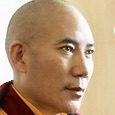
“If you want to become a bodhisattva on the path to buddhahood, sooner or later you absolutely must cultivate immeasurable love and compassion for all sentient beings without exception, in order to be able to cultivate bodhicitta – the mind of enlightenment – the sincerest heartfelt loving and compassionate wish to attain the enlightened state of a buddha for the benefit of all sentient beings without exception. Once you have cultivated this absolutely authentic bodhicitta, you have at last become a bodhisattva on the path to buddhahood.
The problem for so many people is that they don’t believe in their bodhisattva potential, so their love and compassion remains extremely limited, and it usually extends no further than to their closest family members. And even then, their love and compassion for certain family members is rarely stable. Many people say things like, “That person was so horrible to me, how can I possibly ever love them?!” Although there is no denying that that person may have acted harmfully towards you and had caused you to suffer, if you only focus on those worldly superficial circumstances that drive you apart, and not on the deepest spiritual reality that forever lovingly bonds you, you will struggle to forgive them, let alone have love and compassion for them.
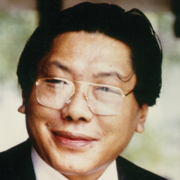
“The point of Shambhala Training is to get out of the cocoon, which is the shyness and aggression in which we have wrapped ourselves… A Shambhala warrior is someone who is brave enough not to give in to the aggression and contradictions that exist in society…who is able to step out of the cocoon–that very comfortable cocoon that he or she is trying to sleep in.”

“This is a worthy post-Sakyong offering solidly based in the Buddhist and Shambhala teachings with the addition of context from similarly minded belief systems. The course offers more of a support system with weekly classes/discussions over the 13 gatherings versus the weekend of Shambhala Level II. It’s worth your consideration despite any sincere testimony/marketing quotes in support of the course.”
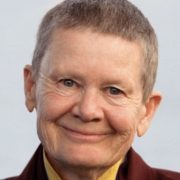
“One of the metaphors for ego is a cocoon. We stay in our cocoon because we’re afraid—we’re afraid of our feelings and the reactions that life is going to trigger in us. We’re afraid of what might come at us. But if this avoidance strategy worked, then the Buddha wouldn’t have needed to teach anything, because our attempts to escape pain, which all living beings instinctively resort to, would result in security, happiness, and comfort, and there would be no problem. But what the Buddha observed is that self-absorption, this trying to find zones of safety, creates terrible suffering. It weakens us, the world becomes more terrifying, and our thoughts and emotions become more and more threatening as well there.”
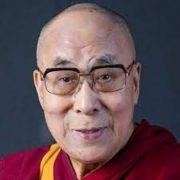
“The foundation of the Buddha’s teachings lies in compassion, and the reason for practicing the teachings is to wipe out the persistence of ego, the number-one enemy of compassion.”
Who This Course Is Not For
This course is not a fit if:
- You are looking for quick fixes or motivational hype
- You want spirituality without self-examination
- You are unwilling to practice regularly between sessions
- You prefer ideology over direct experience
- You are looking for a belief system or guru.
This work requires honesty, patience, and participation.
A Final Word
Freedom is not something you believe in.
It is something you train.
This course is an invitation to stop outsourcing your stability, stop fighting yourself, and learn how to live with clarity in the middle of an unpredictable world.
If that feels quietly necessary rather than exciting, you’re likely in the right place.
Source Material
The methods used in this course come from long-standing human traditions that studied attention, suffering, and freedom long before modern psychology existed. These include contemplative disciplines often associated with Buddhism, non-dual and indigenous wisdom traditions, as well as insights echoed in contemporary neuroscience and Eastern psychology. They are presented here without religious framing, belief requirements, or cultural conversion. The emphasis is on what works when applied in real life.
In other words, the majority of practices offered in this course predate modern ideology and were developed by humans solving the same problems we face today: fear, compulsive thinking, emotional reactivity, and inner conflict. They persist because they work.
How This Course Differs from Therapy, Coaching, and Retreats
Compared to Therapy
Therapy often focuses on healing past wounds and managing symptoms. This course focuses on understanding how suffering is generated in real time, recognizing what perpetuates suffering, seeing what releases it, and living that recognition in ordinary life. Many participants find the work complementary to therapy, but the emphasis here is awareness, discipline, and conscious action rather than diagnosis or treatment.
Compared to Coaching or Self-Help
Coaching typically works by optimizing the personality: goals, habits, performance. This course does the opposite. It helps you see how identity itself is constructed and how compulsive patterns dissolve when they are understood rather than improved. The result is less effort, not more.
Compared to Retreats
Retreats can produce insight through removal from daily life. This course is designed for integration. The work happens in the middle of your actual relationships, responsibilities, and pressures. Freedom is trained where you live, not somewhere quieter.
Bottom Line
This course is not about becoming better at managing life. It is about becoming less divided while living it.
Experienced Practitioners
This course may be especially meaningful for practitioners who have engaged in contemplative or meditation-based training and sense that something essential was touched, but not fully integrated into emotional life and daily action. The emphasis here is not on learning new ideas, but on completing the application of awareness where it matters most.
About Kit Kanohoaloha Wynkoop
Kit Kanohoaloha Wynkoop has spent over five decades studying and teaching contemplative disciplines drawn from Buddhism, non-dual traditions, indigenous wisdom, and Eastern psychology. His work focuses on practical methods for stabilizing attention, understanding emotional reactivity, and living with ethical clarity in complex, modern conditions.
 Kit is not a teacher in the conventional sense, but a guide who points, clarifies, and encourages embodiment. His role is not to transmit beliefs, but to help orient attention toward a path of freedom that has been tested by human beings for thousands of years and across countless cultures. The emphasis is practical: to recognize what perpetuates suffering, to see what releases it, and to live that recognition in ordinary life.
He has taught meditation and awareness-based training in residential retreat settings, long-form curricula, and live online formats, with an emphasis on direct experience rather than belief or ideology. His teaching style is grounded, disciplined, and relational, emphasizing application in daily life over spiritual identity.
Kit’s work is informed by both formal training and lived experience, and is designed for people who want fewer concepts and more clarity, fewer promises and more responsibility. He lives and teaches with the understanding that freedom is not a philosophy, but a capacity that must be trained.
Course Details
Schedule & Format
15 Saturdays 10:00am to Noon PST • Live Online • Starts January 2, 2027 • Ends May 22, 2027 (no class on January 16 for Martin Luther King Day) • All time zones welcome • Click here to calculate the day/time in your part of the world.
This program is offered as a stand-alone training and is not part of any ongoing membership or pathway. It is designed for real-world integration, not retreat isolation and is suitable for beginners and experienced practitioners alike.
Each gathering includes a teaching, meditation, and facilitated discussion. Live participation is strongly encouraged, as the work deepens through shared inquiry and real-time engagement.
Recordings will be provided for participants who occasionally need to attend asynchronously due to time zone or life constraints.
This course is designed as a training rather than a lecture series. Consistent attendance and daily practice are part of the commitment.
There will be one scheduled break week during the course to support integration and prevent burnout. Dates will be announced in advance.
Sessions will not be held on January 16 for Martin Luther King Day and following class #7. Those weeks will be used for practice and integration, and the course will resume the following Saturday.
This course builds progressively. Missing sessions occasionally is workable; attending sporadically is not.
Registration
Click here to add your name to the waitlist to be informed when the tuition fee and registration process will be announced (sometime in September 2026).
Frequently Asked Questions
What if I have to miss a live session?
Live participation is strongly encouraged, as the work deepens through shared inquiry and discussion. That said, recordings will be provided for participants who occasionally need to miss a session due to time zone challenges, illness, or unavoidable commitments.
This course builds progressively. Missing a session now and then is workable; attending sporadically is not.
Will sessions be recorded?
Yes. All sessions will be recorded and made available to registered participants for the duration of the course. Recordings are intended as support, not a substitute for live participation.
Are there breaks or holidays during the course?
There will be one scheduled break week during the course to support integration and prevent burnout. Sessions will not be held on major holiday weekends. All break dates will be clearly communicated in advance so you can plan accordingly.
How much time should I expect to commit outside the live sessions?
Participants are asked to commit to approximately 20 minutes of daily personal practice, along with occasional reflection or integration exercises. The work is simple but cumulative; consistency matters more than intensity.
Is this course appropriate if I’m new to meditation?
Yes. Meditation instruction is offered from the ground up and revisited throughout the course. At the same time, experienced practitioners will find the material goes beyond technique into direct application in emotional life and daily action.
Is this course therapy or a replacement for mental health care?
No. This is an educational and contemplative training. It can complement therapy or other forms of support, but it does not replace professional mental health care.
Do I need to hold specific beliefs or follow a particular tradition?
No. The methods draw from long-standing contemplative traditions, but they are presented without religious framing or belief requirements. Participants are encouraged to test everything against their own experience.
What if I fall behind or feel overwhelmed?
The course is designed to be practiced alongside ordinary life. Falling behind occasionally is normal. The emphasis is on returning to the practice with honesty and steadiness rather than keeping up perfectly.
Is this course right for me if I’m already experienced?
If you’ve practiced for years and sense that insight has not fully translated into emotional ease, relational clarity, or daily-life embodiment, this course may be especially relevant. The focus is not on learning new ideas, but on completing the application of awareness where it matters most.
What is expected of participants?
Participants are expected to attend as consistently as possible, practice daily, and engage respectfully in discussion. This course works best when everyone treats it as a shared training rather than a passive learning experience.
What if my schedule or circumstances change?
Life happens. If you anticipate frequent conflicts that would prevent regular attendance, it may be wiser to wait for a future offering. This protects both your experience and the integrity of the group.